Introduction
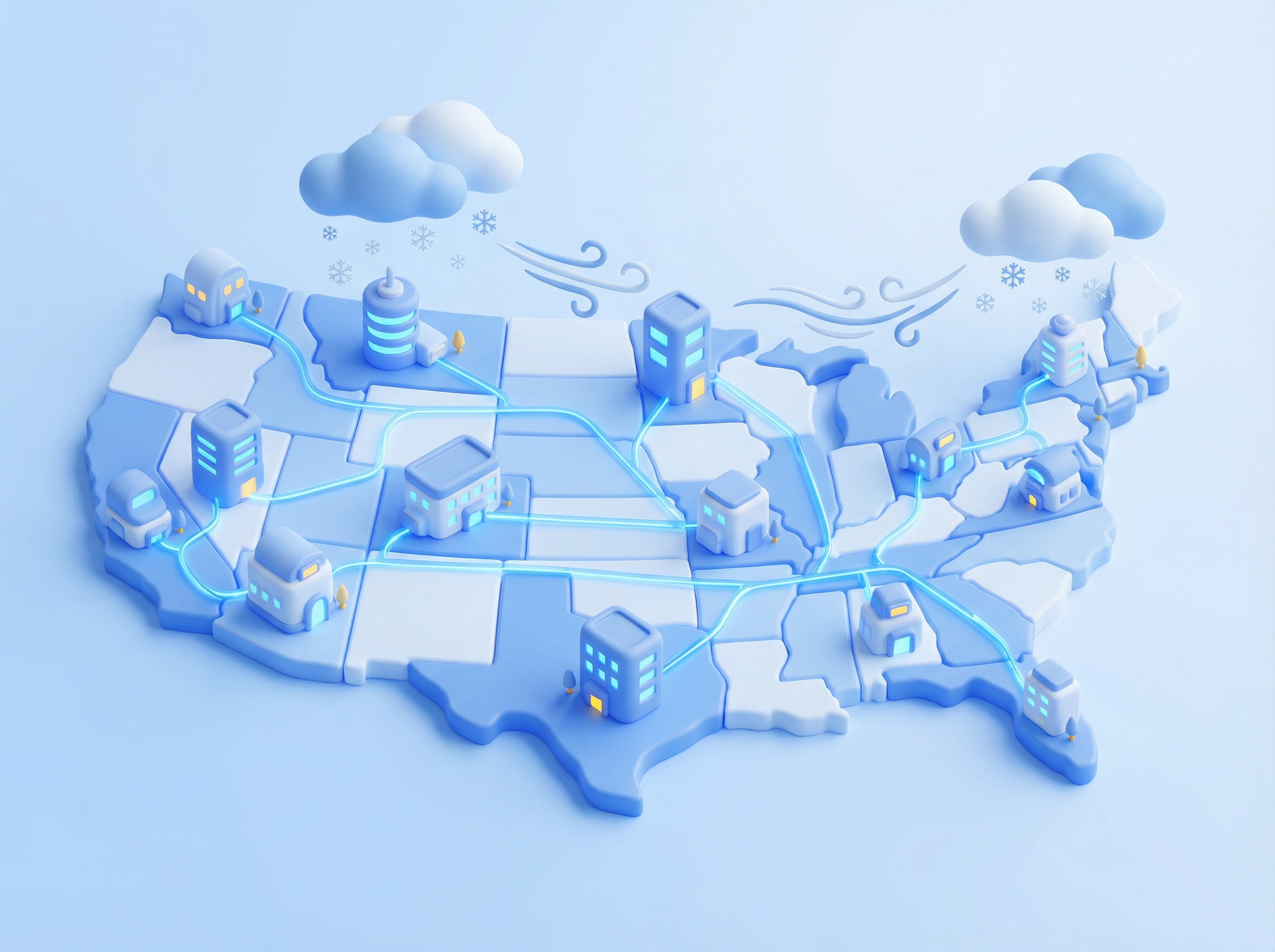
A snowstorm that shuts down Dallas creates a different crisis than the same storm hitting Minneapolis. The difference isn't just about snow depth. It's about infrastructure built for winter, employees who know how to drive in ice, and supply chains designed around seasonal disruptions. Yet most multi-location businesses use the same winter preparedness plan across all their sites, as if geography doesn't matter.
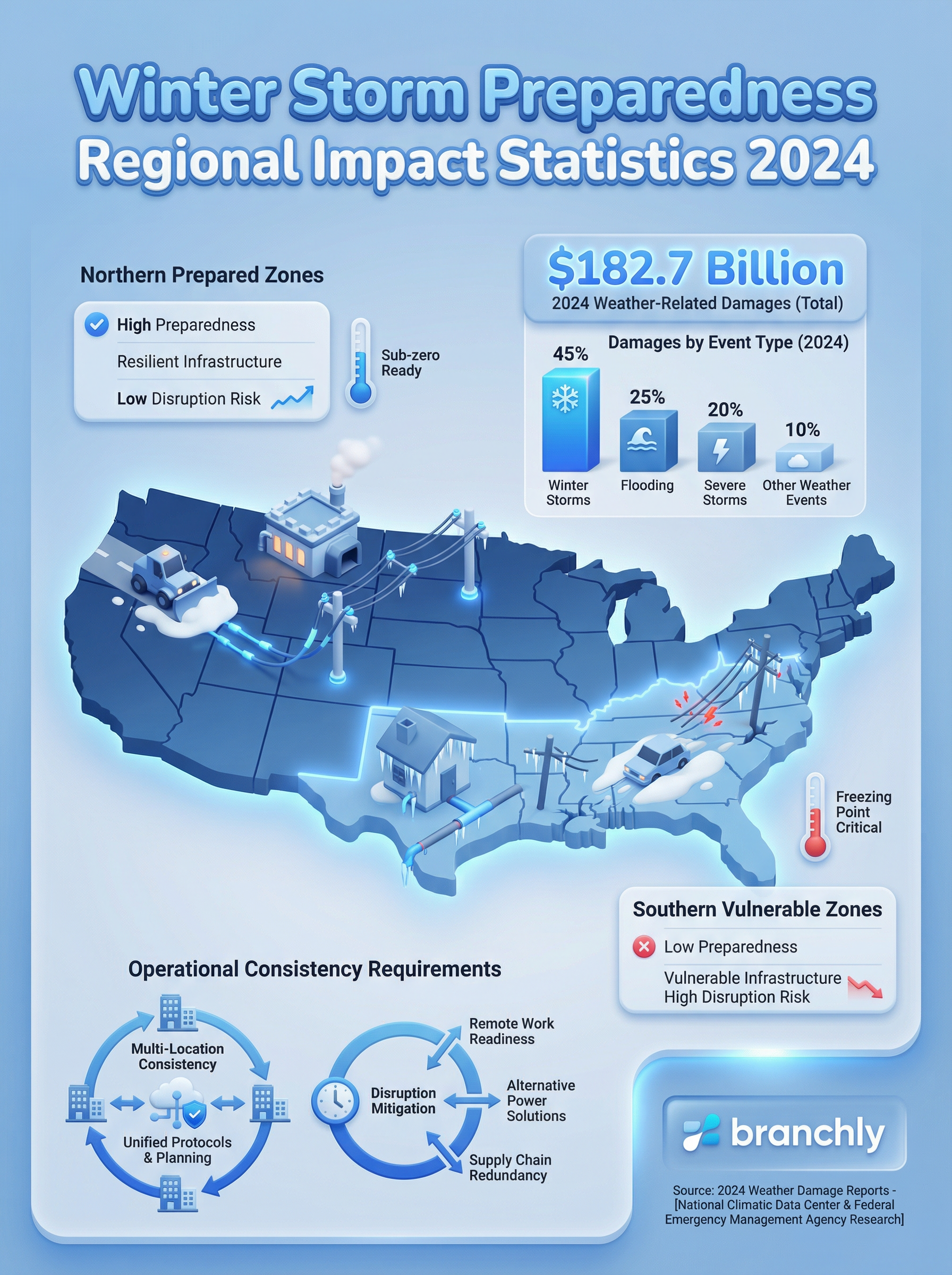
The numbers make the case for change. In 2024, the United States experienced 27 separate billion-dollar weather disasters, including two major winter storm events, with total costs reaching approximately $182.7 billion. Winter weather impacts vary dramatically by region, with Tennessee businesses reporting 31.3% experiencing monetary losses during extreme winter weather, while Arkansas saw 28% of businesses affected during the same period. The challenge for organizations operating in multiple regions is clear: you can't prepare for winter as if every location faces identical risks. Regional differences in climate exposure, infrastructure readiness, and historical weather patterns create distinct vulnerability profiles that demand location-specific response strategies while maintaining brand consistency and operational standards across your entire network.
Understanding Regional Winter Weather Patterns
The United States doesn't experience winter weather as a monolithic event. Regional atmospheric patterns, topography, and proximity to bodies of water create fundamentally different winter challenges across geographic zones. The polar vortex, a circumpolar wind pattern that normally contains Arctic air within polar regions, has become increasingly unstable in recent years, projecting severe cold into traditionally milder areas. These disruptions occur in waves, with meteorologists tracking multiple rounds of Arctic air outbreaks within short timeframes, making historical weather data less reliable for planning purposes.
Northern Plains and Upper Midwest: Predictable Severity
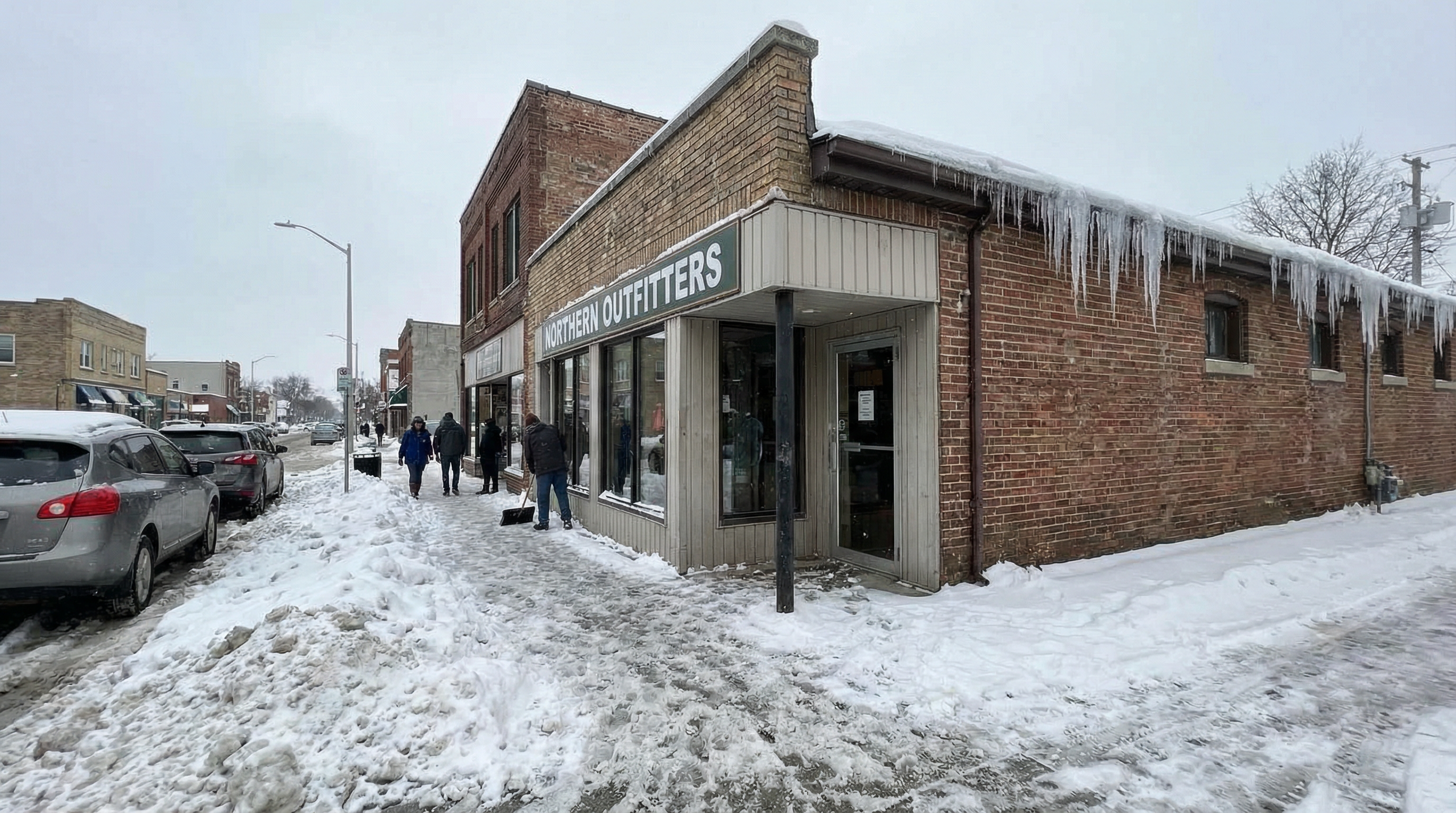
States like Wisconsin, Minnesota, Michigan, and Indiana experience winter weather characterized by accumulating snow, subzero temperatures, and lake-effect phenomena. When cold Arctic air moves across the warmer waters of the Great Lakes, it generates intense, localized precipitation events that can deposit multiple inches of snow in narrow geographic bands. Chicago exemplified this vulnerability in 2024, experiencing record-breaking snowfall for November with over 8 inches at O'Hare International Airport, shattering the previous record set in 1951. This single weather event resulted in approximately 300 flight cancellations and 1,600 delays.
The operational challenge in these regions extends beyond transportation delays. Snow accumulation affects facility heating demands, creates structural load considerations for building roofs, and impacts workforce availability. But infrastructure in these areas is built for winter. Roads have snow removal equipment staged and ready. Buildings have heating systems designed for prolonged cold. Employees own winter clothing and know how to drive in snow.
South and Southeast: Rare but Catastrophic Events
Tennessee, Arkansas, Louisiana, and parts of Texas face a different vulnerability profile. Winter weather occurs infrequently, but when it happens, the impact is disproportionate because infrastructure and operational preparedness for winter conditions remain minimal. During late January and February 2024, extreme winter weather swept across much of the central and southern United States. Census Bureau data documented that 31.3% of businesses in Tennessee and 28% in Arkansas experienced monetary losses due to extreme weather during this period.
The February 2021 Storm Uri demonstrated the cascading nature of winter impacts in unprepared regions. Freezing temperatures disabled natural gas infrastructure, including electrically-operated pumps and antifreeze injection systems, leading to power plant shutdowns that exacerbated blackouts affecting 4.5 million people. The economic calculus of infrastructure winterization appears unfavorable in areas where freezing events remain sufficiently rare, until catastrophic failures occur and costs run into the tens of billions of dollars.
Northeast Corridor: High-Density Vulnerability
The Northeast experiences relatively predictable winter weather but faces distinct challenges related to transportation density, aging infrastructure, and the collision between Atlantic storm systems and Arctic air masses. The region's vulnerability emerges not from unpredictability but from the sheer intensity and geographic extent of individual storm events. Economic concentration in Northeast metropolitan areas, particularly around the Interstate 95 corridor serving Boston, New York, and Philadelphia, creates catastrophic exposure from weather-related service disruptions.
When forecasted winter storms converge with Arctic air masses, the meteorological interactions result in extremely heavy snow accumulation across large metropolitan areas containing millions of residents and thousands of businesses. The aggregate economic impact rapidly becomes substantial due to the scale of operations disrupted when winter storms close major transportation arteries or degrade utility infrastructure serving these high-density economic centers.
Winter Storm Preparedness for Multi-Location Businesses: A Regional Approach
Economic Impact Across Industries and Regions
The financial toll of winter weather on U.S. businesses has escalated dramatically over the past decade. NOAA's tracking of billion-dollar weather and climate disasters provides the most comprehensive data, using inflation-adjusted loss figures that enable longitudinal analysis. Looking at the historical record from 1980 through 2024, the United States has sustained 403 weather and climate disasters where damages reached or exceeded $1 billion, with overall costs reaching approximately $2.725 trillion when adjusted for inflation to 2024 dollars.
Regional Concentration of Losses
The distribution of weather-related losses reveals significant regional concentration. Florida leads in total cumulative costs at approximately $450 billion, primarily due to hurricane impacts. Texas ranks second with approximately $436 billion in cumulative costs despite experiencing the highest number of billion-dollar disasters since 1980. Louisiana ranks third with approximately $314 billion in total costs. While winter weather impacts don't match the devastating costs of major hurricanes, they represent substantial economic losses that compound through repeated disruptions affecting the same geographic regions and business communities.
Insurance industry data provides complementary context. In 2024, Canada experienced insured losses from severe weather totaling $9.2 billion, including over $1.8 billion in commercial insured losses. Canadian insurance data documented that insured losses for damage to homes, businesses, and vehicles over a five-year period had doubled from $10 billion to $20 billion, demonstrating an accelerating trend in weather-related losses. This doubling over five years suggests that either the frequency or severity of severe weather events is increasing faster than historical trends would predict.
Industry-Specific Vulnerabilities
Transportation and logistics companies face dual impacts: direct physical damage to facilities and equipment, combined with operational disruption from weather-related road closures and reduced driver availability. Census Bureau data revealed how weather impacts cascade through supply networks. When Hurricane Beryl made landfall in Houston on July 8, 2024, businesses in the Houston Metropolitan Statistical Area initially reported 25.4% experiencing weather-related monetary losses based on data collected July 1-14. This figure jumped to 56.4% just two weeks later, indicating expanding ripple effects through supply chains as downstream operations experienced disruption.
Manufacturing experiences winter weather impacts through multiple pathways: direct facility damage from snow loads or ice, utility service interruption affecting production equipment, workforce availability challenges when employees cannot commute, and supply chain disruption when suppliers cannot deliver critical materials. The cold supply chain sector faces particularly severe challenges. When extreme winter weather disrupts the movement of temperature-sensitive freight, consequences include complete loss of products in transit, shutdown of production facilities awaiting critical inputs, and cascading impacts through retail networks.
The Retail and Hospitality Challenge
Retail and hospitality businesses experience complex impacts involving both direct operational disruption and demand volatility. Winter storms often suppress customer traffic by making shopping hazardous, reducing employee availability, and creating uncertainty that causes consumers to postpone discretionary purchases. However, certain retail sectors selling winter supplies, heating equipment, and emergency provisions may experience surge demand immediately before and after winter events.
Infrastructure Vulnerabilities by Geographic Zone
Critical infrastructure vulnerabilities vary substantially across U.S. geographic regions based on historical investment patterns, climatic exposure assumptions embedded in infrastructure design standards, and the concentration or distribution of critical facilities. The energy sector experiences winter weather impacts through multiple channels: extreme cold increases demand for heating energy precisely when extreme weather threatens supply infrastructure, utility outages affect backup power systems, and damaged infrastructure requires extended periods for repairs.
America's fragmented and underfunded grid faces mounting blackout risks as extreme weather collides with soaring electricity demand. The U.S. grid was built for a different era, designed around predictable weather patterns and centralized generation. Decades of underinvestment have left much of this infrastructure vulnerable to failure precisely when demand surges. The Texas experience during Storm Uri demonstrated cascading impacts: freezing temperatures disabled natural gas infrastructure, leading to power plant shutdowns that exacerbated blackouts affecting millions of residents. The energy sector's critical importance to all other business sectors means that energy disruptions rapidly translate into economy-wide impacts affecting every industry and geographic location.
Transportation infrastructure faces similar regional disparities. Northern states maintain extensive snow removal equipment, road treatment capabilities, and protocols for winter road maintenance. Southern states typically lack this infrastructure because the infrequency of winter weather makes permanent investment economically questionable. When severe winter weather does occur in these regions, transportation networks become impassable not because of excessive snow accumulation but because of insufficient equipment and expertise to clear roads quickly.
Building Tiered Regional Response Protocols
Effective winter preparedness for multi-location operations requires moving beyond standardized national plans to regional response tiers that account for local conditions while maintaining operational consistency. The goal isn't to create completely separate plans for each location but to establish a framework that scales response intensity based on regional vulnerability and historical weather patterns.
Zone Classification by Winter Risk Profile
Start by classifying your locations into risk zones based on historical winter weather patterns, infrastructure readiness, and business impact potential. High-frequency zones include locations in northern states where winter weather occurs regularly and infrastructure is designed for winter operations. These locations need detailed protocols for operations during snow and ice, but the baseline assumption is that business continues with modifications rather than complete shutdown. Medium-frequency zones cover transitional regions where winter weather occurs periodically but infrastructure readiness varies. Low-frequency zones include southern locations where winter weather is rare but catastrophic when it occurs.
The distinction matters because response protocols should match both the likelihood and the consequences of winter weather. High-frequency zones need protocols that assume winter operations continue with adjustments: altered delivery schedules, employee remote work options, and facility winterization as routine practice. Low-frequency zones need protocols that assume potential shutdown because infrastructure cannot support safe operations during rare severe weather events.
Pre-Season Preparation by Zone
Regional preparation should begin well before winter weather arrives. High-frequency zones should complete facility winterization by early November: testing heating systems, inspecting roof structures for snow load capacity, stocking ice melt and snow removal equipment, and training staff on winter operations protocols. Medium-frequency zones should complete similar preparations by mid-November, with emphasis on supply chain resilience since these regions often lack the distributed infrastructure for rapid restocking after disruptions. Low-frequency zones face a different calculation: the infrequency of events makes extensive infrastructure investment questionable, but the lack of preparation creates catastrophic vulnerability when events occur.
For low-frequency zones, the preparation focus shifts to decision frameworks rather than infrastructure. Establish clear criteria for when locations should close preemptively rather than attempt to operate through conditions that local infrastructure cannot handle. Identify alternative suppliers and distribution routes that don't depend on local transportation networks. Create communication templates explaining closures to customers in ways that protect brand reputation. The goal is to avoid the scenario where locations attempt to maintain operations during conditions they're not equipped to handle, creating safety risks and customer service failures.
Operational Consistency Across Regional Differences
Regional response tiers create a tension: locations need flexibility to respond to local conditions, but brands need consistency in how they serve customers and communicate during disruptions. The solution isn't to force identical responses across different conditions but to establish consistent decision-making frameworks that produce locally appropriate actions.
Standardized Activation Triggers with Regional Thresholds
Create activation triggers based on operational impact rather than weather metrics alone. A trigger might be 'local transportation becomes hazardous for employee commutes' rather than 'six inches of snow.' This allows a Minneapolis location to continue operating in conditions that would shut down a Dallas location, while maintaining the same underlying decision framework: locations close when safe employee transportation becomes impossible.
Similarly, establish triggers for supply chain disruption, utility failure, and facility damage that focus on business impact rather than weather conditions. When a location activates its winter response plan, the trigger should be verifiable business impact, not subjective assessment of weather severity. This creates consistency in decision-making while allowing responses to match local conditions.
Communication Templates with Regional Customization
Pre-approved communication templates should maintain brand voice while allowing regional customization. A template might read: 'Due to severe winter weather affecting our [REGION] locations, we are implementing modified operations to ensure employee safety and maintain service quality.' The brand message remains consistent (we prioritize safety and service), but regional insertion allows specificity about local conditions.
Avoid the temptation to create completely separate communication strategies by region. Customers who interact with your brand in multiple locations expect consistency in how you communicate, even if the operational decisions differ based on local conditions. The communication framework should be identical across regions, with customization limited to specific details about local conditions and impacts.
Supply Chain Resilience Through Regional Diversity
Winter storms can shut down more than the efficient movement of freight. In many cases, they shut down the production of perishable products entirely. Multi-location operations should build supply chain resilience by avoiding single points of failure concentrated in weather-vulnerable regions. If all your critical suppliers operate in the same geographic zone, a regional winter storm creates simultaneous disruption across your entire network.
Geographic diversity in supply chains isn't just about redundancy. It's about matching supplier locations to the winter risk profiles of the regions they serve. Locations in high-frequency winter zones should have supply relationships with vendors who operate in similar conditions and understand winter logistics. Locations in low-frequency zones should have backup suppliers who can ship from regions unaffected by the same weather systems that occasionally disrupt local supply chains.
Testing and Validation Across Regional Conditions
Winter preparedness plans exist on paper until they're tested under realistic conditions. The challenge for multi-location operations is that realistic conditions vary dramatically by region. A tabletop exercise that makes sense for Minneapolis operations feels absurd to Dallas staff because the scenario assumes infrastructure and employee capabilities that don't exist in that region.
Testing should occur at both regional and enterprise levels. Regional exercises should use scenarios that match local historical weather patterns and infrastructure capabilities. A Gulf Coast region exercise should focus on the rare ice storm that shuts down unprepared infrastructure, while a Great Lakes region exercise should focus on coordinating operations across multiple simultaneous snow events affecting different locations to different degrees. Enterprise-level exercises should test coordination across regions experiencing different levels of disruption simultaneously: how does your supply chain adapt when southern distribution centers are offline but northern operations continue?
Learning from Regional Winter Storm Case Studies
The best teacher for winter preparedness is recent history, particularly events where organizations succeeded or failed in ways that reveal systemic strengths or vulnerabilities. Storm Uri in February 2021 provides the clearest case study in how regional differences in infrastructure readiness create catastrophically different outcomes from the same weather event.
Lessons from Storm Uri: When Infrastructure Assumptions Fail
Texas power infrastructure was designed around assumptions that extreme cold would be brief and infrequent. Natural gas infrastructure included electrically-operated pumps and antifreeze injection systems that worked fine in typical Texas winters. When prolonged extreme cold arrived, these systems failed precisely when demand surged. The cascading failures affected 4.5 million people and caused damages estimated in tens of billions of dollars.
For multi-location businesses, the lesson isn't that Texas should build infrastructure identical to Minnesota. The lesson is that rare events in unprepared regions create disproportionate impacts that standard business continuity planning often misses. Your winter preparedness plans should account for the possibility that low-frequency zones will experience conditions outside their infrastructure design parameters, and that when this happens, normal backup systems may also fail.
The Chicago Thanksgiving 2024 Snow Event
Chicago's record November snowfall in 2024 demonstrates a different pattern: extreme weather in a prepared region. The infrastructure existed to handle the snow. Roads were cleared. Buildings remained operational. But the sheer volume of flights canceled and delayed revealed how even prepared regions experience significant business disruption when extreme weather exceeds normal parameters. For businesses with operations concentrated in high-density transportation hubs, even regions with excellent winter infrastructure create vulnerability when weather events affect critical nodes in transportation networks.
Emerging Pattern: Severe Weather Moving to New Regions
Recent years have seen severe weather patterns moving into regions with limited historical experience. The challenge this creates for multi-location operations is that historical weather data becomes less reliable for planning. Regions that rarely experienced winter disruption now face periodic severe events. This doesn't mean every location needs identical winter infrastructure, but it does mean that low-frequency zones should plan for conditions more severe than historical patterns would predict.
The practical implication: your regional risk classifications should be revisited annually based on recent weather patterns rather than solely on historical data. A region that experienced minimal winter disruption for decades but has seen multiple events in recent years should be reclassified to reflect this changing risk profile. The goal isn't to over-prepare every location for worst-case scenarios but to ensure your risk assessment reflects current patterns rather than historical assumptions.
Winter preparedness for multi-location businesses isn't about applying the same solution everywhere or creating completely separate plans for each location. It's about establishing a consistent framework that produces locally appropriate responses while maintaining operational consistency and brand standards across your network. Regional differences in climate, infrastructure, and historical weather patterns create fundamentally different risk profiles that demand location-specific strategies. Organizations that build regional response tiers, test them under realistic conditions, and learn from recent weather events will maintain operations and protect their brands when winter weather disrupts unprepared competitors.
Summary
Winter weather creates fundamentally different challenges across U.S. regions, with impacts ranging from routine operational adjustments in prepared northern areas to catastrophic infrastructure failures in unprepared southern zones. The 2024 data is clear: with $182.7 billion in weather-related damages and winter storms accounting for significant business disruption, regional response strategies are no longer optional for multi-location operations.
The solution isn't identical plans everywhere or completely separate strategies by location. It's establishing consistent decision-making frameworks that produce locally appropriate responses while maintaining brand consistency. Organizations that classify locations by winter risk profile, establish activation triggers based on business impact rather than weather metrics alone, and test regional plans under realistic conditions will maintain operations when winter weather disrupts their markets.
Key Things to Remember
- ✓2024 saw $182.7 billion in weather-related damages across 27 billion-dollar disasters, with two major winter storm events affecting business operations nationwide.
- ✓Regional infrastructure differences create drastically different winter impacts: 31.3% of Tennessee businesses and 28% of Arkansas businesses experienced monetary losses during 2024 winter weather because southern infrastructure isn't designed for winter conditions.
- ✓Effective multi-location winter preparedness requires regional risk zones with location-specific protocols that maintain consistent decision-making frameworks while allowing locally appropriate responses.
- ✓Supply chain resilience depends on geographic diversity to avoid single points of failure concentrated in weather-vulnerable regions, particularly for temperature-sensitive products.
- ✓Historical weather data is becoming less reliable as severe weather moves into new regions, requiring annual reassessment of regional risk classifications based on recent patterns rather than long-term historical averages.
How Branchly Can Help
Branchly's AI-powered platform automatically generates location-specific winter weather playbooks based on regional risk profiles, historical weather patterns, and local infrastructure capabilities. Instead of manually creating separate plans for each location or forcing identical protocols across different regions, Branchly's system analyzes your network of locations and produces customized response plans that maintain brand consistency while accounting for regional differences. Pre-approved communication templates automatically adapt to local conditions while preserving your brand voice, and real-time weather monitoring triggers appropriate responses based on business impact rather than weather metrics alone.
When winter weather threatens your operations, Branchly's Command Center provides visibility across all locations simultaneously, showing which sites are activating winter protocols, where supply chains are disrupted, and how regional impacts cascade through your network. The platform's intelligence layer learns from each winter event, automatically suggesting improvements to regional response tiers based on what worked and what didn't. You're not managing winter preparedness through static PDF plans that don't account for regional differences. You're building adaptive regional response capabilities that improve with every winter season.
Citations & References
- [1]
- [2]
- [3]
- [4]New data finds severe weather inflicted unprecedented losses for Canadian businesses in 2024 ibc.ca View source ↗
- [5]Heavy snow predicted for Northeast as Midwest still struggles with Thanksgiving weather abcnews.go.com View source ↗
- [6]Potential weekend snow in eastern US to follow 1st of 3 polar vortex episodes accuweather.com View source ↗
- [7]
- [8]
- [9]
- [10]
- [11]