
Introduction
A Fortune 500 company's Latin American division suffered five consecutive years of losses, including $15 million in a single year. Leadership thought they understood their top risks. They were wrong. A comprehensive assessment revealed that just seven risks, none on the CEO's original list, accounted for 80% of their financial impact. The enterprise risk team had the data. They just couldn't translate it into action when it mattered.
This scenario plays out across industries every day. Enterprise risk management programs excel at identifying and categorizing threats. Risk registers grow comprehensive. Heat maps get color-coded perfectly. Board presentations look polished. Yet when an actual crisis strikes, the response falls apart. Different departments scramble independently. Communication breaks down. Decisions stall. The elegant risk framework becomes a document nobody references while the building burns.
The Numbers Tell a Troubling Story
The disconnect between risk identification and crisis response is measurable. According to Gartner research, only 18% of enterprise risk management leaders express high confidence in their ability to identify emerging risks. That's a problem on its own. But the execution gap runs deeper. Research from NC State University's Enterprise Risk Management Initiative found that only 24% of organizations rate their risk management as mature or robust. The remaining 76% acknowledge significant gaps in how they translate risk awareness into operational readiness.
Perhaps most telling: 87% of risk professionals report that their risk management processes aren't widely accepted within their organizations. That statistic explains why beautifully constructed risk frameworks gather dust during emergencies. The people who need to act don't trust, understand, or even know about the plans their ERM teams created. And 41% of organizations have experienced three or more critical risk events, according to Forrester's survey of ERM decision-makers. Each event tests whether risk identification actually connects to crisis response capability.
Quick Self-Assessment
Ask your front-line managers: Do you know where to find our crisis response plans? If more than half hesitate, your ERM program has a translation problem, not an identification problem.
Why Traditional ERM Struggles with Crisis Activation
Traditional risk management operates in silos. IT handles cybersecurity. Finance manages financial risk. Operations owns supply chain concerns. Legal tracks compliance. Each department builds its own risk registers, conducts its own assessments, and develops its own response procedures. NC State University's research identifies five critical limitations of this approach: risks that fall between departments get overlooked, responses in one area create unintended consequences elsewhere, internal focus misses external threats, strategic decisions lack input from risk leaders, and leadership never sees the complete risk picture.
This siloed structure worked when risks evolved slowly and stayed contained within departmental boundaries. That world no longer exists. The 2024 collapse of Baltimore's Key Bridge illustrates how interconnected risks cascade. A maintenance oversight may have caused a loose electrical cable. That cable may have triggered a power failure. The power failure led to a ship collision. The collision created supply chain disruptions affecting manufacturers and retailers across the country. A small operational risk became a regional economic crisis because no single department owned the full chain of events.
The Permacrisis Problem
Risk experts have coined a term for our current environment: permacrisis. We live in an era of continuous, overlapping challenges that transcend traditional boundaries. Economic downturns blend with geopolitical tensions. Public health crises intersect with supply chain disruptions. Climate events compound cyber vulnerabilities. The Institute of Enterprise Risk Practitioners notes that the predictability of crises has become increasingly elusive, demanding dynamic approaches that traditional ERM frameworks weren't designed to handle.
In 2024 alone, the United States experienced 27 weather and climate disasters with losses exceeding $1 billion each, totaling $182.7 billion in damages according to NOAA. Third-party involvement in data breaches doubled from 15% to 30%, per Verizon's research. Organizations face risks from AI adoption, regulatory shifts, geopolitical instability, and workforce disruptions simultaneously. Traditional quarterly risk reviews cannot address threats that materialize in hours and cascade through interconnected supply chains faster than email chains can circulate.
The Maturity Gap
59% of organizations still rely on spreadsheets for ERM program management, with only 21% implementing dedicated platforms. This technology gap directly impacts crisis response speed.
Bridging the Gap: From Risk Registers to Response Readiness
The solution isn't abandoning enterprise risk management. It's connecting risk identification to operational response. Organizations succeeding at this transition share common practices. They engage first-line managers in identifying and owning risks rather than treating ERM as a second-line function that operates above daily operations. When front-line teams participate in risk assessments, they surface non-obvious connections and spot warning signs earlier. They also know where response plans live when emergencies strike.
Cross-functional teams represent another critical element. When issues span multiple departments, such as a security incident involving IT, legal, and HR, organizations need panels of experts who can quickly assess risk and coordinate action. According to WTW's 2024 Political Risk Survey, significantly more organizations reported forming cross-functional teams compared to previous years. These teams bring diverse perspectives and enable more agile responses to emerging threats. They break down the silos that cause response delays.
What Multi-Location Organizations Get Wrong
For organizations with multiple branches, stores, or facilities, the ERM-to-response gap compounds across locations. Corporate risk teams build enterprise frameworks, but individual locations face unique threat profiles based on geography, staffing, infrastructure, and local regulations. A hurricane playbook developed at headquarters may not account for how a specific branch's layout affects evacuation routes. A cybersecurity incident response plan might not address which local manager has authority to take systems offline.
The result: inconsistent responses across the organization. One location handles a crisis professionally while another scrambles. Customers receive different communications depending on which branch they contact. Brand reputation suffers because the corporate risk framework failed to translate into location-specific action plans. Organizations need systems that adapt enterprise risk insights to local operational realities without requiring each location to build independent programs from scratch.
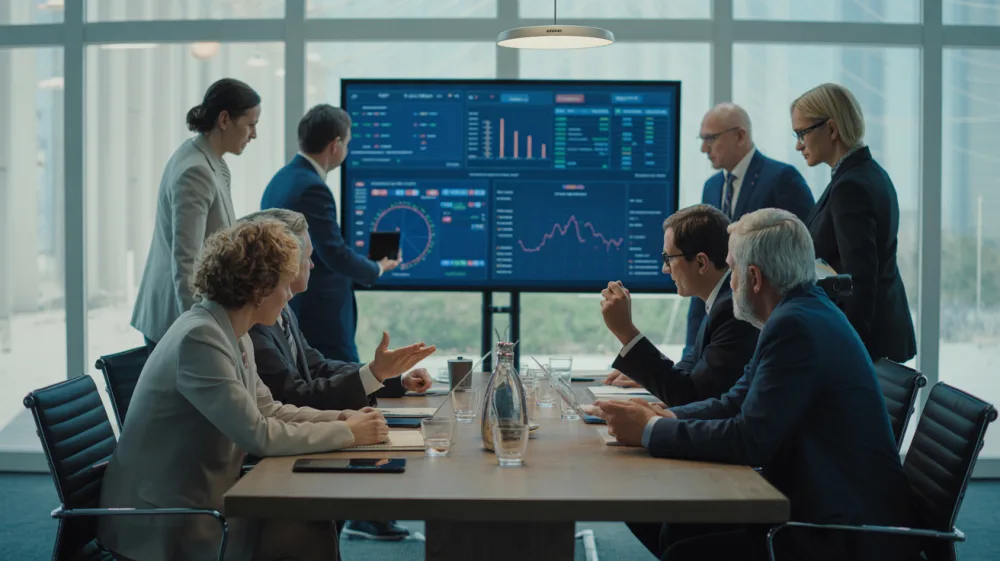
From Assessment to Action
Real-time risk visibility enables faster decisions
Building the Connected Risk Organization
EY has introduced a framework called Enterprise Resilience Management that points toward the future of this discipline. The approach encompasses strategic resilience where functional areas including supply chain, operations, finance, IT, and cybersecurity develop specific resilience strategies that align with each other. This requires coordination across compliance, finance, and internal audit to drive unified risk assessment and management. The quality of questions organizations pose about risk management leads to better answers and therefore better operations.
Mayer Brown's research on enterprise risk strategies emphasizes that effective planning requires clear thinking, prioritization, and discipline. Organizations need genuine understanding of risk exposure, buy-in from senior management, elimination of information silos, mechanisms for elevating critical information, and a speak-up culture. Most importantly, companies must generate reliable and actionable intelligence before a crisis that enhances decision quality during and after events. Enterprise-wide training and practice exercises build trust, strengthen relationships, and align teams around intended response approaches.
The Technology Gap Holding Organizations Back
Tools for measuring and mitigating risks have improved significantly. AI-powered platforms can analyze vast datasets to identify patterns and anomalies indicating emerging risks. Predictive analytics use historical data to forecast future threats. Machine learning models continuously improve accuracy by learning from new information. Yet adoption lags behind capability. The global GRC software market reached $38 billion in 2024 and is projected to hit $138 billion by 2030, growing at 15.4% annually. That growth reflects urgent demand, but implementation remains uneven.
Integrated platforms achieve 25-50% reduction in implementation time and up to 70% reduction in maintenance overhead by eliminating custom integration development, according to SAP's CIO Trends 2025 report. Organizations implementing unified systems see results in their ability to connect risk insights across departments and respond cohesively when disruptions occur. The technology exists to bridge the gap between enterprise risk identification and crisis response activation. The barrier is organizational willingness to move beyond spreadsheets and siloed tools.
Summary
Enterprise risk management has never been more sophisticated at identifying threats. The frameworks are comprehensive. The assessments are thorough. The board presentations are professional. But none of that matters if crisis response remains disconnected from risk identification. Organizations that thrive in the permacrisis era will be those that translate risk awareness into operational readiness, break down departmental silos, engage front-line teams in response planning, and deploy technology that connects insight to action. The gap between knowing your risks and responding to them effectively is where resilience lives or dies.
Key Things to Remember
- ✓Only 24% of organizations rate their risk management as mature, while 87% of risk professionals say their processes aren't widely accepted internally.
- ✓Siloed risk management creates blind spots where threats falling between departments get overlooked and responses in one area cause unintended consequences elsewhere.
- ✓Cross-functional teams and first-line engagement are critical to translating enterprise risk frameworks into operational response capability.
- ✓Multi-location organizations face compounded challenges adapting corporate risk insights to location-specific action plans without building independent programs at each site.
How Branchly Can Help
Branchly bridges the gap between enterprise risk identification and crisis response activation. Our platform transforms risk assessments into actionable playbooks that adapt automatically to each location's unique profile. When a crisis hits, pre-approved communications, role-specific task assignments, and real-time tracking ensure consistent response across all branches. Your enterprise risk insights become operational reality in seconds rather than hours, with every action logged for compliance and continuous improvement.
Citations & References
- [1]2024 State of Risk Oversight Report: 15th Edition NC State University ERM Initiative & AICPA View source ↗
- [2]
- [3]
- [4]
- [5]