
Introduction
At 2:47 AM, your core banking system goes offline. Within minutes, you're on a conference call with IT, operations, compliance, and your vendor. Everyone talks over each other. No one knows who's making the final call. Two hours later, you're still debating next steps while your branches prepare to open without functioning systems.
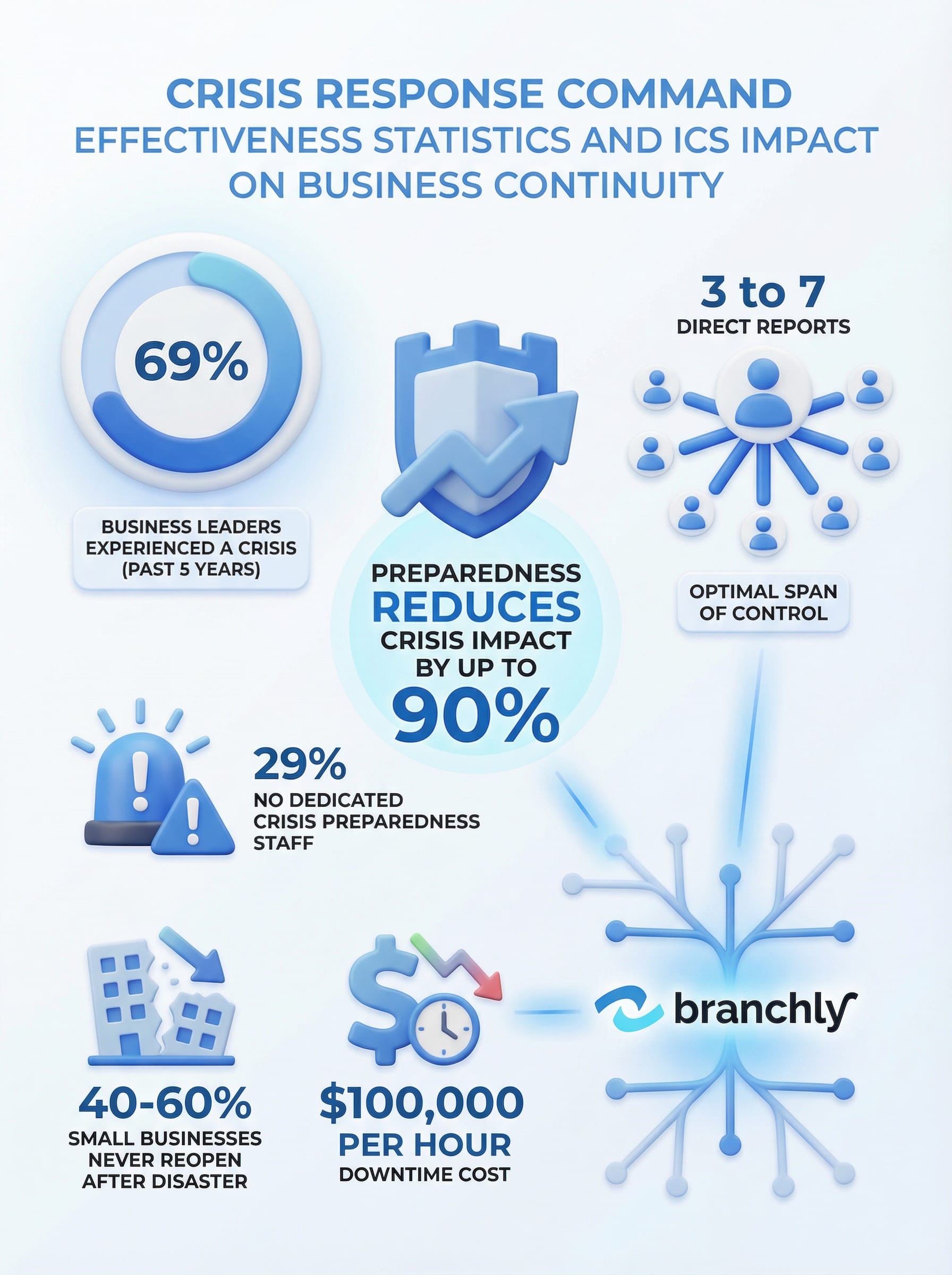
This isn't a hypothetical. It's the reality for organizations without clear command structures during crises. Research shows 69% of business leaders experienced a corporate crisis in the past five years, yet 29% have no dedicated crisis preparedness staff. When emergencies strike, the organizations that respond fastest and most effectively aren't necessarily the biggest or best-resourced. They're the ones that borrowed a framework firefighters figured out decades ago: the Incident Command System.
What the Incident Command System Actually Is
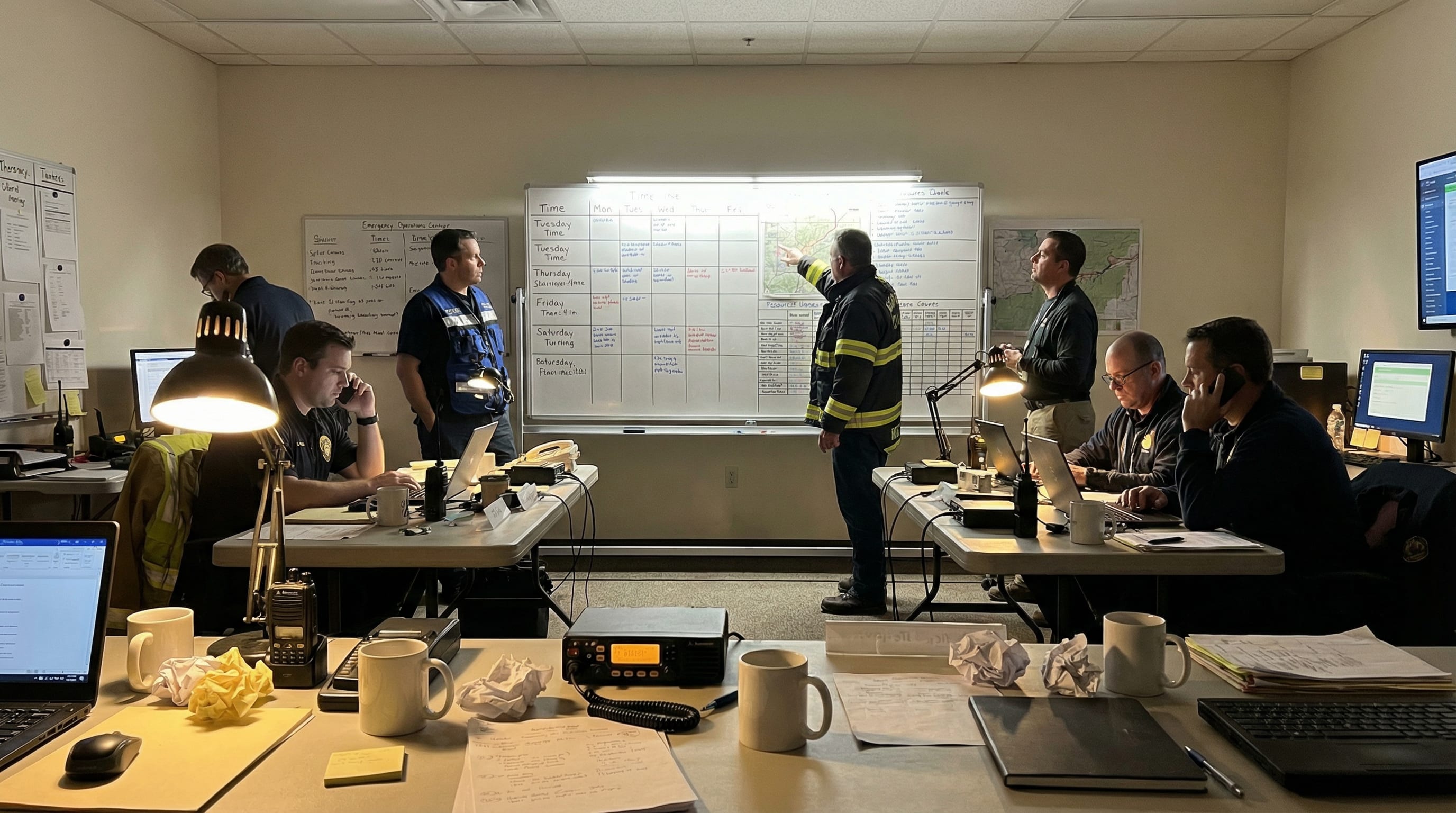
The Incident Command System started in firefighting but evolved into a standardized, all-hazard approach to managing emergencies across police, EMS, and increasingly, private sector organizations. At its core, ICS solves a fundamental problem: how do you coordinate multiple teams, each with specialized expertise, under intense time pressure without chaos?
The answer is deceptively simple. Establish a clear chain of command, use common terminology, maintain a shared picture of what's happening, and scale your response structure to match the incident size. These aren't revolutionary concepts, but most businesses abandon them the moment stress levels spike.
ICS works because it removes the two biggest failure points in crisis response: ambiguity about who decides, and confusion about what's actually happening. When a structure fire breaks out, there's never a debate about who's in charge. The Incident Commander makes the call, period. That clarity doesn't slow decisions down. It accelerates them.
Why Firefighters Don't Debate Strategy Mid-Crisis
ICS emerged after California wildfire agencies realized overlapping jurisdictions and unclear command caused preventable deaths. They standardized who decides what, when, and how information flows. The result: faster decisions and better outcomes under pressure.
The Chain of Command Isn't About Ego, It's About Speed
In ICS, the Incident Commander holds overall responsibility for managing the incident, setting objectives, and approving action plans. Everyone reports through defined channels. No one freelances. This isn't micromanagement or bureaucracy. It's the fastest path to coordinated action when seconds matter.
The problem in corporate crisis response isn't that people don't want to help. It's that too many people try to help simultaneously without coordination. Your IT director orders a system rollback. Your COO tells branches to open anyway. Your compliance officer insists on regulatory notification first. Each decision makes sense in isolation, but together they create competing priorities and wasted effort.
A clear chain of command means one person makes the final call after gathering input. That person isn't necessarily the most senior executive. In ICS, the Incident Commander is whoever has the expertise and availability to manage that specific incident. For a cybersecurity breach, your CISO might lead. For a weather event closing multiple branches, your VP of Operations takes point. Authority follows the incident, not the org chart.
The Cost of Unclear Leadership
Companies lose approximately $100,000 per hour of downtime. When leadership debates who should decide instead of making decisions, every minute compounds losses. Clear command structures prevent paralysis.
When you need multiple agencies or departments working together, ICS uses Unified Command. Representatives from each organization jointly make decisions while maintaining their jurisdictional authorities. This prevents turf wars and ensures everyone's constraints are considered upfront, not discovered mid-response.
Span of Control: Why You Can't Manage 47 People During a Crisis
ICS maintains an effective span of control between three to seven direct reports per supervisor. When incidents grow, you add layers. You don't just pile more people under one overwhelmed leader.
This modular approach scales with incident complexity. A small event might have the Incident Commander directly managing a handful of roles. As the situation grows, you activate additional sections: Operations handles tactical response, Planning manages documentation and status tracking, Logistics secures resources and facilities, Finance tracks costs and contracts.
The beauty of this structure is you only activate what you need. A two-hour power outage doesn't require a full command staff. But if that outage extends to two days and affects multiple sites, you scale up systematically rather than reactively piling on people.
Most businesses do the opposite. They start with an all-hands crisis call where 30 people listen to updates they don't need while waiting for their turn to speak. Information flow becomes a bottleneck instead of an accelerator. ICS fixes this by creating designated roles that funnel information to the right people at the right time.
Apply This Today
Review your last crisis response. Count how many people reported directly to the person running the response. If it's more than seven, your structure is too flat. Add mid-level coordinators to manage smaller teams and report summaries up.
The Common Operating Picture: Everyone Sees the Same Thing
In ICS, maintaining a common operating picture means all teams share a consistent understanding of incident status, objectives, and resource deployment. This isn't optional. It's the mechanism that prevents duplicate work and conflicting actions.
During corporate crises, information fractures immediately. Branch managers hear one thing on a group text. Regional directors get different details on email. Executives receive sanitized summaries in Slack. By the time everyone compares notes, the situation has changed and decisions are based on stale data.
ICS solves this through structured information flow and designated roles. The Public Information Officer controls external messaging to prevent conflicting statements. The Safety Officer monitors responder safety and recommends protective actions. The Liaison Officer coordinates with external organizations. Each role has a specific function that feeds into the common picture.
The practical application for businesses is simple: designate who updates the status dashboard, who communicates externally, and who manages internal notifications. Don't let everyone broadcast updates simultaneously. Centralize information collection, then distribute it through defined channels.
Why Message Consistency Matters
When customers receive contradictory information about service restoration times, trust erodes faster than the crisis itself. ICS prevents this by routing all public communication through a single coordination point.
Standardized Terminology Prevents Dangerous Assumptions
ICS uses standardized terms to improve communication across agencies. When a firefighter says 'Code 3,' every responder knows exactly what that means. No interpretation required. No room for misunderstanding.
Corporate crisis teams rarely establish this baseline. Someone says 'critical system outage' and half the room assumes that means complete failure while others interpret it as degraded performance. Your IT team says 'rollback complete' but branches still can't process transactions. The words sound clear until you realize everyone heard something different.
Before your next crisis, define key terms. What does 'contained' mean? What constitutes 'full restoration' versus 'partial operations'? When you say 'evacuate,' are you talking about customers only or staff too? Write these definitions down and train people on them before they're needed.
Common terminology also extends to forms and documentation. ICS uses standardized forms for situation reports, resource requests, and action plans. This consistency means someone can step into an incident midstream and quickly understand status without lengthy briefings. Your crisis documentation should work the same way.
Why Most Crisis Plans Fail in Reality
Research shows that 40 to 60% of small businesses never reopen after a disaster. Among the survivors, companies with solid preparedness reduce crisis impact by up to 90%. The difference isn't luck. It's whether plans translate to action under pressure.
Most crisis plans fail because they're written for ideal conditions. They assume your CEO is available, systems are accessible, and everyone remembers their training. ICS works because it assumes the opposite. Plans are structured to function with incomplete information, substitute personnel, and degraded communications.
The other common failure is inadequate communication planning. Organizations spend months documenting recovery procedures but neglect to define who says what to whom during execution. Internal teams don't know when they'll get updates. Customers receive conflicting information from different channels. Regulators discover the incident from news reports instead of official notification.
ICS addresses this by making communication planning as rigorous as tactical planning. The Public Information Officer role isn't an afterthought. It's a core command staff position with specific responsibilities and authority. This principle applies directly to business crisis management: your communications lead should have equal standing with your technical recovery lead.
Test the Right Things
Don't just test whether backups restore. Test whether your designated Incident Commander can be reached at 3 AM. Test whether branch managers know who to call when systems fail. Test whether anyone can find your crisis plan without searching email.
Adapting ICS to Corporate Environments
You don't need to adopt ICS wholesale. The framework is adaptable. The core principles translate cleanly to business contexts without requiring federal certifications or military-style hierarchies.
Start with clear command designation. For each type of incident your organization might face, identify who leads the response. Don't make this a theoretical exercise. Name actual people with backup designees. Document their authority to make decisions without escalating to the CEO for approval.
Next, define your scalable structure. What roles activate for a localized incident versus a company-wide crisis? Who manages communications? Who tracks action items and deadlines? Who interfaces with vendors and external agencies? Map these roles before you need them, and train backups for each position.
Establish your common operating picture mechanism. This might be a shared dashboard, a dedicated Slack channel with strict posting rules, or a conference bridge with defined check-in intervals. The specific tool matters less than the discipline: one authoritative source of current status, updated at regular intervals.
Finally, practice the structure through exercises. ICS became effective because fire departments run drills constantly. Your team needs the same repetition. Run tabletop exercises where people practice their assigned roles. Test whether your command structure holds up when the designated leader is unavailable. Identify gaps before real incidents expose them.
Start Small
Don't wait for the perfect plan. Implement one ICS principle this quarter. Designate incident commanders for your top three risks. Add span of control limits next quarter. Build incrementally rather than waiting for a complete overhaul.
What Success Looks Like
Organizations that adopt ICS principles report faster recovery times and stronger stakeholder trust. The difference shows up in concrete metrics: shorter downtime, faster decision cycles, fewer communication errors, and better documentation for post-incident analysis.
More importantly, teams report feeling less chaotic during responses. When everyone knows their role and trusts the command structure, the natural human tendency to panic or freelance diminishes. People focus on executing their piece rather than worrying about the whole picture or second-guessing leadership.
Success also means better compliance documentation. Financial institutions face strict requirements from NCUA, FFIEC, and other regulators. ICS-influenced response structures naturally generate the audit trails and documentation these agencies demand. Every action has a timestamp, every decision has a documented rationale, and every change in status is logged centrally.
The ultimate measure of success is what happens after the crisis. Organizations with clear command structures conduct better after-action reviews because they have clear data on what worked and what didn't. They identify bottlenecks, recognize gaps in authority, and refine procedures based on actual performance rather than assumptions.
ICS Principles for Business Crisis Response
Core components that translate from emergency services to corporate environments
Summary
The Incident Command System works because it solves the fundamental problems that cause crisis response failures: unclear authority, poor information flow, and organizational structures that collapse under pressure. You don't need to become a firefighter to apply these lessons. You need to acknowledge that crises expose organizational weaknesses faster than any consultant ever could, and prepare accordingly. Clear command, defined roles, common terminology, and scalable structures aren't bureaucratic overhead. They're the difference between coordinated response and expensive chaos. The question isn't whether your organization will face a crisis. It's whether your leadership structure will hold together when it does.
Key Things to Remember
- ✓Clear chain of command eliminates decision paralysis during crises. Designate Incident Commanders for each major risk scenario before incidents occur.
- ✓Maintain span of control between three to seven direct reports per supervisor. Scale command structure as incidents grow rather than overwhelming single leaders.
- ✓Common operating picture prevents conflicting actions. Centralize status updates and distribute through defined channels instead of letting everyone broadcast simultaneously.
- ✓Standardized terminology prevents dangerous misunderstandings. Define key terms before crises and train teams on consistent usage.
- ✓ICS principles work because they assume degraded conditions. Design response structures that function with incomplete information and substitute personnel.
How Branchly Can Help
Branchly applies ICS principles through its Command Center, giving you the clear command structure and common operating picture that emergency responders rely on. When you activate a response, the platform automatically assigns roles based on incident type, maintains real-time status visibility across all locations, and logs every action with timestamps for compliance documentation. Your designated Incident Commander sees exactly which tasks are complete, which locations need attention, and which team members are handling specific responsibilities. Pre-approved communication templates route through defined channels, preventing the conflicting messages that erode stakeholder trust. The system scales from single-location incidents to company-wide crises without requiring you to rebuild command structures on the fly. After each response or drill, Branchly analyzes what worked and suggests improvements to your playbooks, creating the continuous refinement loop that makes ICS effective in practice.
Citations & References
- [1]What any crisis communications team can utilize from the Incident Command System playbook - Hill & Knowlton hillandknowlton.com View source ↗
- [2]
- [3]Chapter 3 – Incident Command System – Emergency Scene Management I – FIRE-1114 bccampus.ca View source ↗
- [4]nrt.org View source ↗
- [5]ca.gov View source ↗
- [6]iaajournals.org View source ↗
- [7]69% of business leaders have experienced a corporate crisis in the last five years yet 29% of companies have no staff dedicated to crisis preparedness pwc.com View source ↗
- [8]
- [9]Comprehensive Guide to Crisis Management: Strategies for Success USA protechtgroup.com View source ↗
- [10]
- [11]5 Most Common Gaps in Crisis Management That Could Cripple Your Response - Expert Crisis Management and Disaster Preparedness | Early Alert earlyalert.com View source ↗
- [12]Crisis Management Planning: Business Continuity and Disaster Recovery risk-strategies.com View source ↗