
Introduction
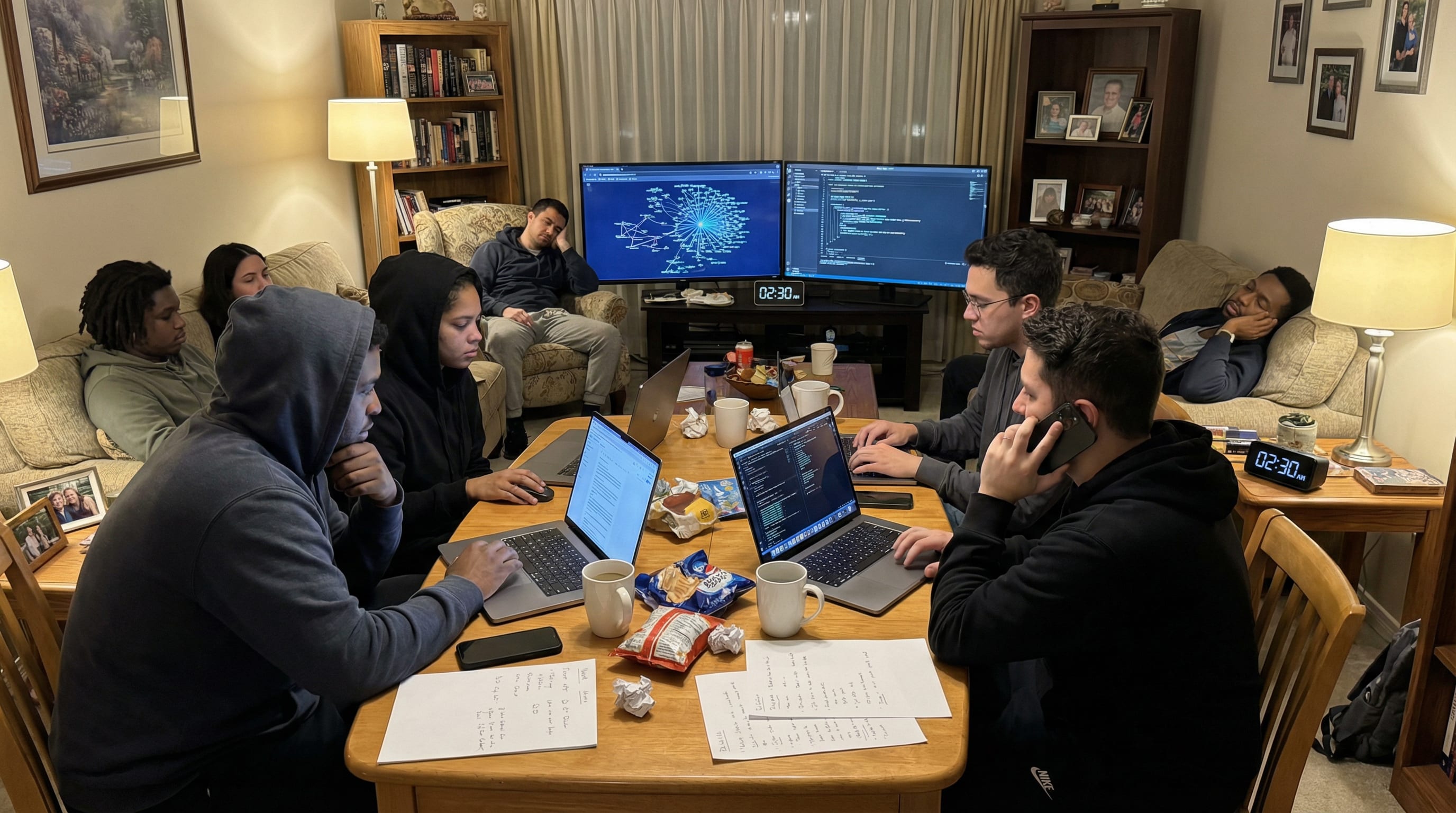
Your server's compromised at 2 AM. Your IT director is on vacation. Your backup specialist quit three months ago, and you never replaced her. The ransomware demand sits in your inbox, and you have no idea if paying is legal, traceable, or even likely to work.
This is when organizations call external incident response teams. But waiting until you're in crisis mode costs money and increases damage. The question isn't whether you'll ever need outside help. It's knowing when to bring them in before things spiral, and how to structure that relationship so it actually works when you need it.
The Real Cost of Going It Alone
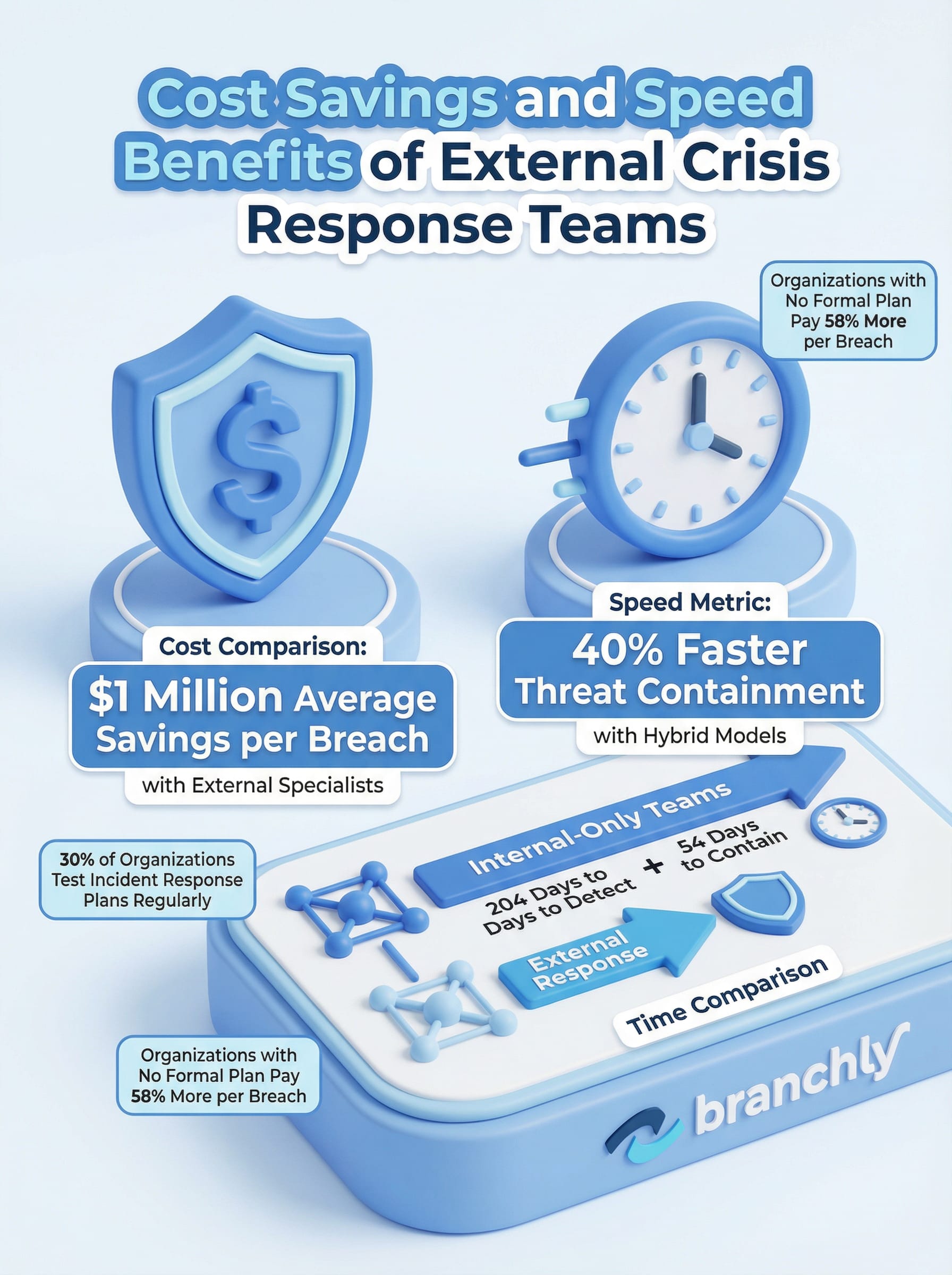
Organizations that handle cybersecurity incidents purely with internal teams pay an average of $1 million more per breach than those who involve external specialists. That's not a typo. One million dollars.
The math makes sense when you break it down. Internal teams know your environment better than anyone. They understand your legacy systems, your workarounds, and where all the bodies are buried. But they often lack the specialized forensic tools, cross-industry threat intelligence, and sheer capacity to run a 72-hour incident response marathon while keeping normal operations running.
The average breach takes 204 days to detect and another 54 days to contain. Your internal team is already handling daily IT issues, security patches, and user support tickets. Add a sophisticated attack to that load, and response times stretch even longer. Meanwhile, the attacker is exfiltrating data, spreading laterally through your network, and potentially setting up persistent backdoors you won't find for months.
By the Numbers
Organizations with no formal incident response plan pay 58% more per breach than those with structured protocols and access to external specialists.
When Internal Resources Aren't Enough
Smaller organizations face the hardest choice. You don't have the budget for a full-time security operations center, but you can't ignore the threat landscape either. That's where external teams provide asymmetric value.
If you're managing fewer than 500 employees, you probably don't have dedicated incident response staff. Your IT team wears multiple hats, and security is one responsibility among many. When a sophisticated attack hits, you need people who do nothing but incident response and have seen hundreds of similar cases.
External teams bring specialized tools that most organizations can't justify purchasing. Forensic analysis platforms, threat intelligence feeds, and malware sandboxes cost six figures annually. Managed detection and response providers spread that cost across dozens of clients, giving you enterprise-grade capability at a fraction of the price.
Staffing Gap Reality
Organizations without fully staffed incident response teams are vulnerable during transitions, vacations, and unexpected departures. External support provides continuity when internal knowledge walks out the door.
The expertise gap matters more than organizations realize. Your internal IT team is excellent at keeping systems running. But forensic investigation requires different skills: memory analysis, network packet capture, malware reverse engineering, and chain-of-custody documentation that holds up in court. These aren't skills you can pick up from a weekend training course.
High-Severity Incidents That Demand Outside Help
Some incidents are too complex or sensitive for internal teams to handle alone. Ransomware attacks top the list. The moment you discover encryption spreading through your network, you need specialists who can isolate affected systems, identify the attack vector, and determine whether your backups are compromised.
Major data breaches trigger regulatory notification requirements. If you've potentially exposed customer financial data or personal information, you'll need forensic documentation that satisfies regulators and potentially law enforcement. External incident response firms provide the documentation rigor and chain of custody that internal teams rarely have experience with.
Critical infrastructure compromise requires immediate expert intervention. If attackers have accessed your building management systems, payment processing, or core banking platforms, the potential damage extends beyond data theft. You need people who understand industrial control systems, payment card industry requirements, or financial sector threats.
Insurance Coordination
Most cyber insurance policies include coverage for external incident response. Check your policy for panel-approved forensic firms and pre-negotiated rates before you need them.
Insider threats present unique challenges. When you suspect an employee or contractor is stealing data or sabotaging systems, internal IT teams face conflicts of interest. They work alongside the suspect. They may be friends. External investigators provide the objectivity and legal experience that internal investigations lack.
The Hybrid Model: Getting the Best of Both
Smart organizations don't choose between internal and external response. They build hybrid models that combine institutional knowledge with specialized expertise.
Your internal team handles initial detection and triage. They know your normal network traffic patterns, your legitimate admin accounts, and your change management schedule. They can spot anomalies that would take external teams days to identify. When something looks wrong, they have the context to escalate quickly.
External teams provide depth and scalability. Managed detection and response services monitor your environment 24/7, using automation and threat intelligence your internal team can't match. When an incident escalates, they bring additional analysts, forensic specialists, and malware researchers who can work around the clock.
Internal vs. External Response Capabilities
text
The hybrid approach shows up in the data. Organizations using both internal teams and external support contain threats 40% faster than those relying solely on internal resources. The combination means your people aren't trying to become instant forensic experts while simultaneously keeping email running and fielding panicked calls from executives.
Set up these relationships before you need them. Establish a retainer with an incident response firm or enroll in a managed detection and response service. Get your cyber insurance lined up with pre-approved vendors. Run a tabletop exercise together so everyone knows their role when things go sideways.
What External Teams Actually Do
Understanding what external incident response teams provide helps you know when to call them. They're not coming in to take over your entire IT operation. They're specialists who fill specific gaps.
Digital forensics and evidence collection come first. They'll capture memory dumps, preserve logs, and document the attack timeline in ways that hold up legally. If you end up in litigation or need to file an insurance claim, this documentation is what validates your case.
Threat intelligence and attribution help you understand what you're dealing with. Is this a targeted attack by a known threat actor, or did you catch a random ransomware campaign? That distinction changes your response strategy and risk assessment.
Speed Matters
Automated detection systems with external monitoring support contain breaches 40% faster than manual internal processes alone.
Containment and eradication require surgical precision. External teams can isolate compromised systems without disrupting your entire network. They know how to remove attacker persistence mechanisms and verify that the threat is actually gone, not just dormant.
Communications support extends beyond technical response. Many incident response firms include PR specialists who help craft breach notifications, regulatory filings, and customer communications. They've seen hundreds of incidents and know what messages land well versus what triggers panic.
Cloud and hybrid environment expertise is increasingly critical. If your infrastructure spans on-premise data centers, AWS, Azure, and SaaS applications, external teams bring the multi-platform visibility your internal team may lack. They know where to look for lateral movement across cloud boundaries.
Building Your External Response Strategy
You can't build these relationships during a crisis. The time to establish external incident response capability is when everything's running smoothly.
Start with a risk assessment that identifies scenarios your internal team can't handle. You probably manage routine malware incidents and unauthorized access attempts just fine. But ransomware? Nation-state attacks? Compromised industrial control systems? Those need external expertise.
Review your cyber insurance policy carefully. Most policies include incident response coverage, but you need to use their approved vendors to get reimbursed. Some insurers require you to call them before engaging external help, or you'll void coverage. Know these requirements before 2 AM on a Saturday.
Test Before You Need It
Run a tabletop exercise with your external response team annually. You'll discover communication gaps, unclear escalation paths, and access issues while the stakes are low.
Establish retainer relationships with at least one incident response firm. Retainers guarantee availability and lock in hourly rates. Without a retainer, you're competing with every other organization under attack for the same limited pool of specialists. During a major ransomware wave, good luck finding available help.
Document your escalation criteria. What triggers a call to external responders? System compromise affecting customer data? Ransomware encryption? Suspected nation-state activity? Put these thresholds in writing so your team doesn't waste time debating whether to escalate while the attack spreads.
Build knowledge transfer into the engagement. External teams should be teaching your internal staff, not replacing them. Every incident is a learning opportunity. Make sure your team shadows the external responders and documents their methodology.
The Testing Gap That Undermines Everything
Only 30% of organizations regularly test their incident response plans. That means 70% are assuming their carefully documented procedures will work under pressure without ever validating that assumption.
Testing reveals whether your external response strategy actually functions. You'll discover that the contact numbers in your incident response plan are outdated. The VPN credentials you gave your external team expired six months ago. Your insurance policy's breach hotline routes to a voicemail box that nobody checks on weekends.
Run tabletop exercises that include your external partners. Simulate a scenario where your internal team needs to escalate. Who makes the call? What information do they need to provide? How long does it take the external team to mobilize? These aren't questions you want to figure out during an actual breach.
Test your communication channels. Can your external responders access your network remotely when systems are compromised? Do you have out-of-band communication methods if email is down? Have you shared your network diagrams and critical asset inventory in advance, or will the external team waste hours getting oriented?
ROI Reality
Organizations involving external cybersecurity firms alongside internal teams save an average of $1 million per breach compared to purely internal response.
Beyond Cybersecurity: Other Crisis Scenarios
While cybersecurity incidents dominate discussions about external response teams, other crises also benefit from specialist support.
Physical security incidents may require external investigators with law enforcement backgrounds. Workplace violence, theft rings, or sophisticated fraud schemes need people who know how to gather evidence that prosecutors can use.
Public relations crises benefit from external communications consultants who specialize in reputation management. Your marketing team handles everyday communications well, but a data breach, executive misconduct scandal, or product safety incident requires specialists who've managed similar situations.
Regulatory investigations often demand external legal counsel with specific expertise. If NCUA, FFIEC, or FINRA comes knocking, your general corporate counsel may not have the specialized regulatory experience to navigate the investigation effectively.
Natural disasters and facility damage may require external engineering assessments, environmental remediation specialists, or disaster recovery coordinators who can mobilize resources across multiple locations simultaneously.
Making the Call: Decision Factors
When you're in the middle of an incident, how do you decide whether to escalate to external responders? Use these factors as a decision framework.
Scope and complexity matter most. If the incident affects multiple systems, involves unknown attack vectors, or requires specialized forensic analysis, bring in external help. Your internal team can handle isolated incidents with clear remediation paths. Everything else needs specialist support.
Regulatory and legal implications trigger mandatory external involvement. If you're facing potential breach notification requirements, regulatory fines, or litigation, you need forensic documentation and legal expertise that internal teams can't provide.
The 2-Hour Rule
If your internal team can't identify the root cause and containment strategy within two hours, escalate to external specialists. Speed matters more than pride.
Resource availability is practical reality. If your incident occurs during a staffing gap, or requires round-the-clock response your team can't sustain, external resources provide the capacity you need. People can't work 72 hours straight and make good decisions.
Business impact determines urgency. If the incident threatens customer trust, revenue generation, or regulatory compliance, the cost of external expertise is trivial compared to the potential damage. This isn't the time to pinch pennies.
Objectivity requirements sometimes make external help mandatory. Internal investigations of insider threats, executive misconduct, or conflicts of interest lack the independence that external investigators provide. Some situations require clean hands.
Summary
External incident response teams aren't an admission of failure. They're a force multiplier that gives your organization access to specialized expertise, advanced tools, and scalable capacity when you need it most. The organizations that handle crises most effectively don't choose between internal and external resources. They build hybrid models that combine institutional knowledge with specialist capability, establish relationships before incidents occur, and test their escalation procedures regularly. The average $1 million savings per breach when using external support alongside internal teams makes the investment case clear. You can't prevent every incident, but you can control how quickly and effectively you respond. That's where external teams deliver measurable value.
Key Things to Remember
- ✓Organizations involving external responders alongside internal teams save an average of $1 million per breach through faster containment and specialized expertise.
- ✓Hybrid models combining internal knowledge with external specialist support contain threats 40% faster than purely internal response.
- ✓Establish retainer relationships and insurance-approved vendor lists before incidents occur to guarantee availability during major attacks.
- ✓High-severity incidents like ransomware, major breaches, and critical infrastructure compromise require immediate external forensic and legal support.
- ✓Only 30% of organizations test their incident response plans, leaving most unprepared to effectively coordinate with external teams when needed.
How Branchly Can Help
Branchly's crisis response platform helps you coordinate both internal and external incident response teams from a single command center. Our automated playbooks include clear escalation triggers that tell you exactly when to involve external specialists, pre-populated contact information for your retainer firms and insurance providers, and real-time task tracking so everyone knows their role. When you activate an incident, Branchly automatically logs every action, decision, and communication, creating the audit trail regulators and insurance companies require. You'll spend less time coordinating and more time responding, whether you're handling incidents internally or bringing in external expertise.
Citations & References
- [1]
- [2]
- [3]
- [4]
- [5]
- [6]
- [7]
- [8]
- [9]
- [10]
- [11]ponemon.org View source ↗