
Introduction
Hurricane Helene hit western North Carolina in September 2024 and left behind something worse than floodwater: impassable roads. I-40 and I-26 closed at the Tennessee border. Bridges washed away. Debris blocked highways for weeks. Employees who wanted to work physically could not reach their workplaces. For many businesses, the disaster didn't end when the rain stopped. It continued every morning someone couldn't show up.
This is the staffing crisis nobody budgets for. Your building might survive. Your systems might stay online. But if half your team lives across a washed-out road or in an evacuation zone, you're still dead in the water. FEMA estimates that 40% of small businesses never reopen after a natural disaster, and an additional 25% shut down within the first year. A big reason: they couldn't get operations running fast enough because they couldn't get people through the door.
The First 72 Hours Are the Breaking Point
Most business continuity plans focus on systems, data, and facilities. Few account for the human logistics of getting employees from their homes to their workplaces when the normal routes don't exist anymore. The first 72 hours after a major disaster determine whether a business stabilizes or spirals. And in those first three days, staffing is often the weakest link.
Insurance policies often include waiting periods of up to 72 hours before business interruption coverage kicks in. Disaster Unemployment Assistance programs require employees to be unable to work due to disaster conditions. Louisiana state law specifically references a 72-hour return-to-work window for first responders. This 72-hour threshold shows up repeatedly in disaster response frameworks because it represents the critical window where temporary inconvenience becomes operational failure.
Map Your Staff Geography
Pull a list of employee home zip codes and overlay it with your location's commute routes. Identify which highways, bridges, or intersections represent single points of failure. If 30% of your team crosses the same river to get to work, that bridge is now a business continuity risk.
What Your Staff Actually Faces After a Disaster
During Hurricane Helene, 30 employee homes were reported as lost or severely damaged in just one organization's North Carolina operations. Roads in western North Carolina remained flooded and impassable for weeks. Natural gas and water service went out at multiple facilities. The city of Asheville lost water access for over 50 days. These aren't abstract planning scenarios. They're the actual conditions employees navigated while employers waited for them to show up.
The Texas A&M Transportation Institute's 2025 Urban Mobility Report found that American commuters lost the equivalent of nearly eight full workdays to traffic congestion in 2024 under normal conditions. National congestion costs topped $269 billion per year. Now add flooded roads, downed trees, traffic signal outages, and evacuation routes running in reverse. Normal 27-minute commutes become impossible journeys. Employees aren't being stubborn or disloyal. They're stuck.
The Retail Experience
During Hurricanes Helene and Milton in 2024, retailers faced supply chain disruptions, damage to storefronts and warehouses, and temporary closures across the Southeast. Despite massive impacts, retailers including Walmart, Walgreens, and Lowe's opened within days after Helene to serve communities with essential supplies. The difference: coordinated staffing plans that identified which employees could work and how to reach them.
The Legal Reality of Paying People Who Can't Show Up
The Fair Labor Standards Act doesn't require employers to pay non-exempt employees for hours they didn't work during a disaster closure. If your hourly employee couldn't make it in because roads were flooded, federal law doesn't mandate payment for that missed time. But exempt salaried employees operate under different rules. If a salaried employee does any work during a designated workweek, salary basis rules generally require paying them for the entire week.
This creates a planning problem. You might have salaried managers who worked remotely during the disaster and hourly staff who couldn't reach the building. Your payroll obligations differ. Your operational capacity differs. Your recovery timeline depends on knowing who falls into which category and having contingency plans for both. The legal framework also prohibits employees from "volunteering" their services. Any work performed for the employer must be compensated, which complicates informal recovery efforts.
Building a Staffing Continuity Plan
Miami-Dade County assigned more than 6,000 essential workers to manage 80 evacuation shelters during hurricane season. They used HR systems and geographic information systems to make assignments and created an app showing workers located near each shelter along with languages they spoke and other relevant skills. This level of planning treats staff geography as infrastructure, not just an HR detail.
Your plan needs three layers. First, identify essential roles at each location and the minimum headcount required to operate safely. Second, map where those essential employees live and what routes they use. Third, establish backup staffing protocols: who can work remotely, who can be redeployed from unaffected locations, and what cross-training exists to cover gaps. This isn't complicated, but it does require thinking about disasters before they happen.
Communication Is Half the Battle
After a disaster, it's common to lose touch with displaced employees. Mail delivery may not continue. Power outages knock out internet and cell service. Employees may evacuate to areas without reliable connectivity. COBRA regulations still require employers to mail notices to an employee's last known address. The practical solution: send notices to physical addresses, email addresses, and text messages simultaneously. Encourage employees to update contact information even if it's temporary.
Employee check-in systems solve two problems at once. They confirm who is safe and who is available to work. A simple acknowledgment request through a mass notification system tells you within hours which team members can return and which need additional support. This data shapes your staffing plan in real time rather than forcing managers to make phone calls one by one while dealing with everything else a disaster throws at them.
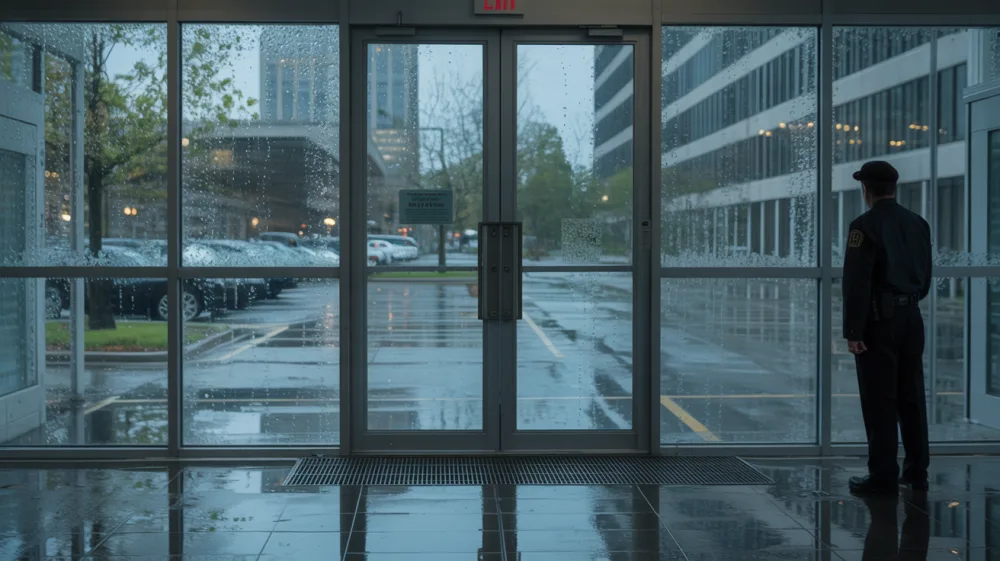
The Waiting Game
When your building is ready but your staff can't reach it, every hour of inaction costs money and erodes customer trust.
The Multi-Location Advantage
Organizations with multiple locations have options that single-site businesses don't. Employees from unaffected branches can temporarily redeploy. Workloads can shift to facilities that are operational. Customer communications can explain service availability by region rather than complete shutdown. But this only works if you've planned for it in advance. Without cross-location staffing protocols, each branch operates as an island during a crisis.
During Hurricane Milton recovery, retail chains that opened quickly did so because they had already identified backup staffing pools and established protocols for redeployment. They knew which locations were likely to flood, which employees lived in higher-ground areas, and how to communicate rapidly across the network. The playbook existed before the storm arrived. Everything else was execution.
Summary
The 72-hour window after a disaster separates businesses that recover from those that don't. Your facility might survive. Your data might be backed up. But if your people can't reach work, none of that matters. Staffing continuity planning means treating employee geography, commute routes, and communication channels as critical infrastructure. It means knowing before a disaster who can work, where they are, and how to reach them. The organizations that opened days after Helene and Milton didn't get lucky. They prepared for a scenario that most businesses ignore until it's too late.
Key Things to Remember
- ✓The first 72 hours after a disaster determine recovery trajectory, and staffing is often the weakest link in continuity plans
- ✓Map employee home locations against commute routes to identify geographic vulnerabilities before disasters occur
- ✓Legal obligations differ for exempt vs. non-exempt employees during closures, requiring advance payroll planning
- ✓Multi-location organizations can redeploy staff across branches, but only with pre-established cross-location protocols
- ✓Employee check-in systems confirm safety and availability simultaneously, enabling real-time staffing decisions
How Branchly Can Help
Branchly's crisis management platform builds staffing continuity into your response playbooks. When a disaster strikes, automated employee check-ins confirm safety and availability across all locations within minutes. The system tracks which team members can work, which need support, and which locations have adequate coverage. Pre-approved communication templates reach staff through multiple channels simultaneously, cutting through the chaos of downed cell towers and spotty internet. For multi-location organizations, Branchly coordinates cross-branch redeployment and maintains real-time visibility into staffing levels at every site. The goal: turn the critical first 72 hours from a scramble into a coordinated response.
Citations & References
- [1]Urban Mobility Report 2025: Commuters lost nearly 8 work days in 2024 to record-high traffic levels Texas A&M Transportation Institute View source ↗
- [2]
- [3]
- [4]
- [5]Comprehensive FAQs For Employers on Hurricanes and Other Workplace Disasters: 2023 Edition Fisher Phillips View source ↗